
YOGA FOR OSTEOPOROSIS
Strong, Steady, Straight
You can turn the challenge of thinning bones into an opportunity for better health and well-being!
FALL I SESSION
Wednesdays, September 2nd - October 21st, 2026
10:30 AM - 11:45 AM Mountain Time (Find your local time)
Investment: $165CAD / $119USD + fees
8 1-hour live classes on Zoom
Weekly live Q&As
BONUS: Session portal (for access to class replays, additional 8-week sessions and short practice videos)

Registration closes Tuesday, September 1st at 4 PM Mountain (6 PM Eastern).
This session focuses on the WARRIOR I SERIES and includes poses targeting the spine, hips, femurs and wrists.


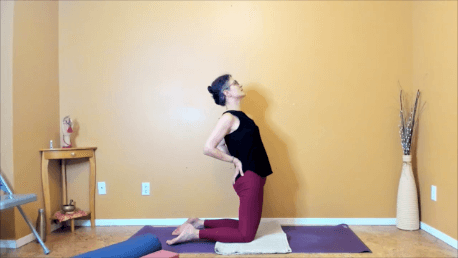
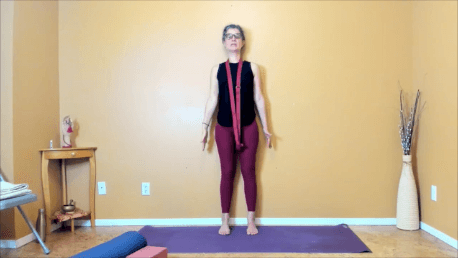


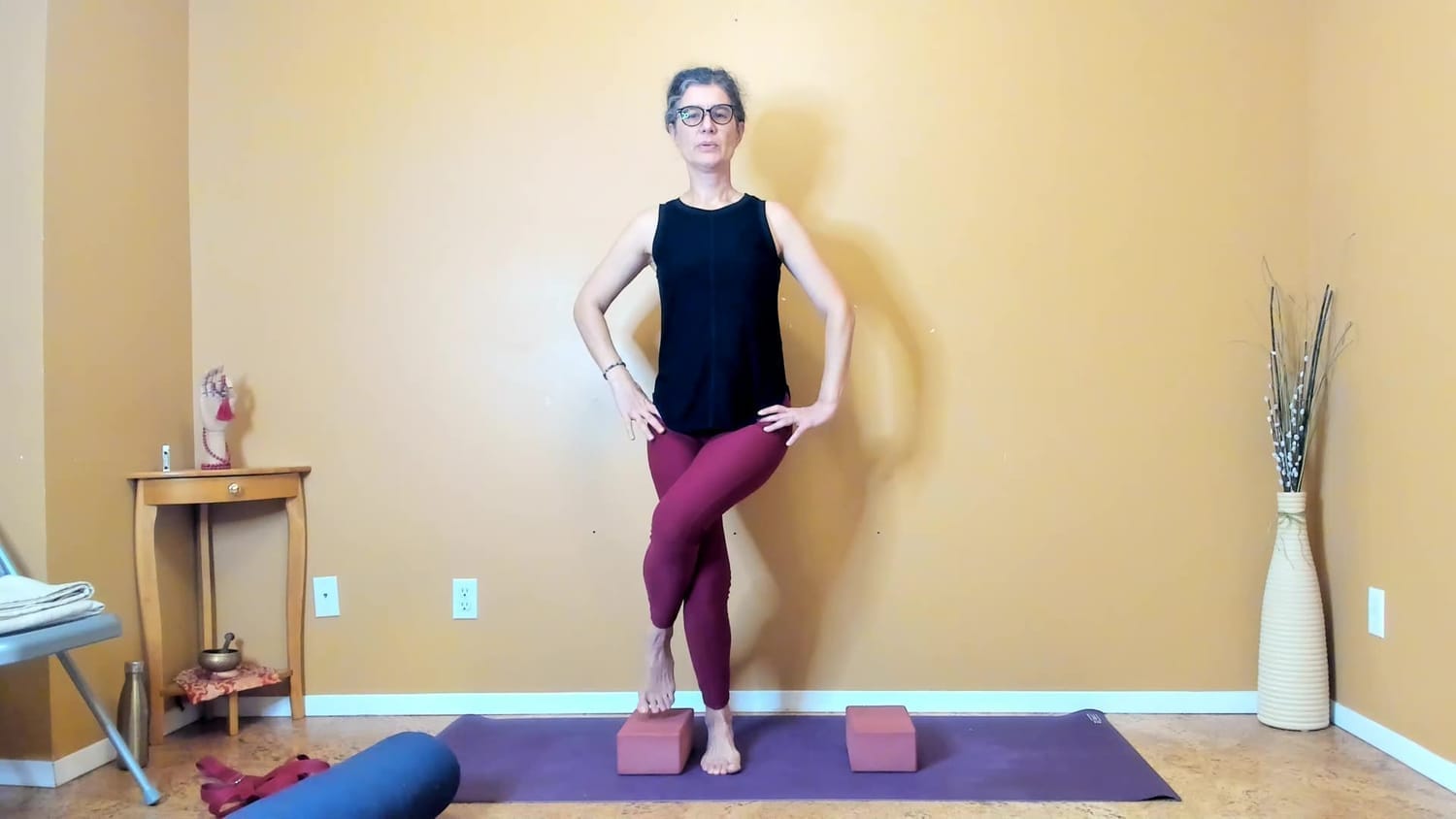


The Problem
with Osteoporosis
If you're here, there's a strong chance you have been diagnosed with osteoporosis or low bone mass. You, my friend, are not alone!
Over 500 million people worldwide are affected by this silent disease and, in many cases, it prevents people from living their best life.
The fear of bone fractures can often lead to anxiety and reduced activity levels, which leads to more muscle and bone loss. It's a vicious cycle!
However, this does not have to be the norm – living with osteoporosis can, in fact, usher in a lifestyle that is healthy, active, mobile, and full of confidence.
Low bone density does not equate to the end of an exciting, active, joyful life.
People with osteoporosis should be encouraged to do more rather than less. The evidence indicates that physical activity and exercise are not associated with significant harm, including vertebral fractures; in general, the benefits of physical activity outweigh the risks.

Yoga can be a valuable part of a holistic approach to managing osteoporosis. It can support people with osteoporosis in their efforts to improve functional strength, posture and balance and decrease the risk of falls and fractures.
A regular yoga practice can lead to:
increased muscle and bone strength ⇨ lowers the risk of fractures
improved balance and coordination ⇨ prevents falls
better posture ⇨ protects against vertebral fractures
Other "side effects" can include:
Increased proprioception & interoception
Improved range of motion in the joints
Increased muscle flexibility
Lower level of inflammation in the body
Decreased levels of cortisol
But, when it comes to osteoporosis, all yoga is not created equal.
Regular yoga classes include many poses that are not safe for people with osteoporosis: deep forward folds that round the spine forward, and deep, seated twists that force the spine to twist to end-range, just to name a few.
Flow classes encourage you to move fast from pose to pose. They include dangerous transitions, little to no alignment focus, and the risk of losing your balance is quite high.
The Yoga for Osteoporosis session includes yoga poses and movement exercises that have been carefully selected and modified to meet the recommendations and safety guidelines put forward by Osteoporosis Canada.

Here's an example of a pose that you will practise during the session: Revolved Triangle.
In a regular yoga class, you might be able to use a yoga block to make the pose more accessible but, since you have osteoporosis, you want to avoid combining spinal flexion with rotation.
If you're flexible enough, a block might be all you need to prevent spinal flexion.
If flexibility is a work in progress, you are probably going to need more props to keep your spine safe.
In a yoga for osteoporosis class, you are encouraged to use as many props as you need to make the pose safe. This is different from person to person. Some people are going to need a chair to safely practice Revolved Triangle, other people are going to need both a chair AND a block.
One size doesn't fit all!
In addition to osteoporosis, each individual can present a unique set of challenges: musculoskeletal imbalances, functional limitations, old injuries, and visual or vestibular issues to name just a few.
A yoga practice adapted uniquely to you is a lot safer and twice as potent as a generic group class that's one size fits all.
Throughout the 8-week session, we'll work together to find the pose variation that best suits your specific needs.
A NEW SESSION IS STARTING ON WEDNESDAY, SEPTEMBER 2ND, 2026.
Registration closes Tuesday, September 1st at 4 PM Mountain (6 PM Eastern).
Whatis included in the 8-week session?
8 live interactive Zoom classes
1-hour yoga class
15-30 min Q&A (get your questions answered live after each class)
Have questions between classes? No problem, I'm happy to answer your questions via email.
Depending on the week, each live 1-hour yoga class can include:
breath work
body awareness
warm-up/mat work
transitions (sit-to-stand, lying down-to-stand)
standing/weight-bearing poses
posture awareness
back extensions
gentle twists
deep relaxation
NEW additions to the program this year:
visual and vestibular systems
safe transitions between short series of poses
off-the-mat healthy habits
In addition to yoga poses, classes also include myofascial release and resistance work using Thera-Bands.
The myofascial work releases tension in the connective tissues. It helps alleviate pain and improve the flexibility and mobility of the body, which in turn improves your alignment (posture) and makes your yoga practice safer and more effective.
The resistance work makes your muscles stronger and may also increase the strength of your bones.
BONUS
To support your daily practice, you will have exclusive access to a distraction-free portal, where you will find:
class replays
recordings of Warrior II & Warrior III 8-week sessions
an additional 8-week posture improvement session
sample practice plans (PDFs) - 3 different levels of practice for each week of the program
a library of 45 practice videos (5-10 minutes each)
restorative yoga series (because people with osteoporosis need to relax just like everybody else!)
A pick inside the Yoga for Osteoporosis Portal
YOGA FOR OSTEOPOROSIS
Session Overview

WEEK 1
BASIC ACTIONS AND PROPER ALIGNMENT
When it comes to osteoporosis, what you DO is as important as what you DON'T DO. Learn the 12 dos and don'ts for a safe and effective practice.

WEEK 2
THE FOUNDATION: FEET, ANKLES & KNEES
Stiff, weak feet and ankles are major contributors to poor balance. Healthy knees require mobile joints above and below and proper alignment during physical movement.

WEEK 3
THE CENTRAL CORE OF BALANCE AND STRENGTH: PELVIS AND LUMBAR AREA
Core stability is defined as the ability to control the position and motion of the trunk over the pelvis to allow optimum movement. A weak, under-recruited core may result in inefficient movements and altered posture, leading to injury (e.g., fragility fractures).

WEEK 4
HYPERKYPHOSIS PREVENTION: MID AND UPPER BACK
Hyperkyphosis (excessive rounding of the upper back) leads to a number of health problems, including impaired breathing and increased risk of falls and fractures.

WEEK 5
SHOULDERS, ARMS AND WRISTS
Wrist strength, shoulder mobility and the relationship between posture and the position of the arm in the shoulder socket.

WEEK 6
THE STRONG AND RESPONSIVE CORE
Traditional core strengthening exercises not only shorten the front body muscles, but they also flex the spine with force and speed, which can lead to vertebral fractures. Learn how to strengthen your core safely and effectively.

WEEK 7
TWISTING WITHOUT SPINAL FLEXION
Proper pressure generated during twisting has a strengthening effect on the vertebral column and the muscles that support the spine. Learn how to safely twist to protect the spine.

WEEK 8
THE THREE S's: STRONG, STEADY, STRAIGHT
Regular practice will increase your body awareness and movement skills, and improve your balance and coordination. It will also help you develop healthy feelings of physical strength and confidence in your ability to self-care and live independently.
Session FAQs
Yes, the sessionincludes yoga poses and movement exercises that have been carefully selected and modified to meet the safety guidelines put forward by Osteoporosis Canada. I call it a practice with an osteoporosis filter.
Yes, this is suitable for people new to yoga. No previous yoga experience is required. The practice can be modified to accommodate various levels of fitness. The ability to transition from floor to standing and reverse is a must.
You will need these props to support your practice:
mat
chair (with a flat seat surface and no padding works best)
8-foot strap
2 blocks
blanket/big bath towel (something that is dense, not fluffy, preferably twin size)
wall space
2-3" rubber ball (or a tennis ball)
elastic resistance band
If you are unable to attend a class live, you will have access to the recording via a distraction-free platform. Just make sure to catch up before the end of the session. Access to the session platform expires on December 24th, 2024.
YOGA FOR OSTEOPOROSIS
Strong, Steady, Straight
FALL I SESSION
Wednesdays, September 2nd - October 21st, 2026
10:30 AM - 11:45 PM Mountain Time
Investment: $165CAD / $119USD + fees
What's included?
8 1-hour live classes on Zoom
weekly live Q&As
BONUS: Session portal (for class replays, short practice videos)
Registration closes Tuesday, September 1st at 4 PM Mountain (6 PM Eastern).
Hi,
I'm Susana.

I am a yoga teacher and yoga therapist, Bone Fit™ trained (Osteoporosis Canada) and a Yoga for Bone Health teacher in the Dr. Fishman Method.
I have been working with people with osteoporosis for the last 6 years, both in person and online, providing support and community.
I encourage people to do more rather than less and adopt a positive approach to osteoporosis management.

I teach people to focus on "how to do" things safely rather than what "not to do".
I strongly believe that yoga has the potential to improve the overall quality of life for people living with osteoporosis.
Be strong, steady and straight,
🙏 Susana
Questions?